
Northampton County Estates Division
Northampton County does not have a standalone county probate court. In North Carolina, estate administration and many special proceedings are handled through the Clerk of Superior Court. The mapped probate name for this project is the Estates Division of the Clerk of Superior Court, which reflects the local custody of wills, estate files, guardianship matters, and related special proceedings. Searchers should not look for a separate probate judge or separate probate courthouse for ordinary Northampton estate files.
The practical record path is the Northampton County Clerk of Superior Court. Public case information may appear through the North Carolina eCourts Portal, and hearings may be searchable through the hearing lookup when the public taxonomy allows it. The Judicial Branch also says civil, special proceeding, and estates case information may be accessed on public self-service terminals at clerk offices. The full file is viewed at the clerk's office in the county where the case is located.
North Carolina's estates help topic explains the statewide estates process.
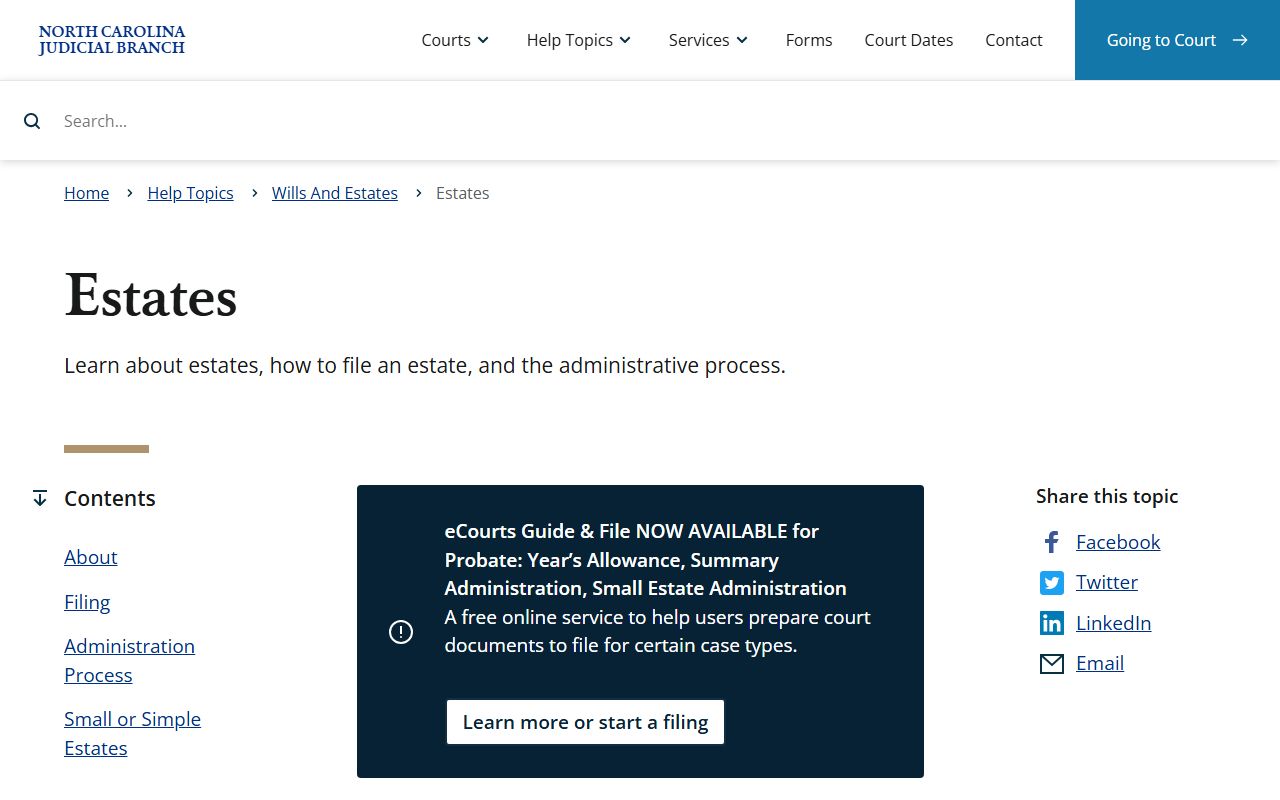
The statewide estates guidance gives the legal context, while the Northampton clerk is the local office for estate-file review and filing questions.
Northampton Probate Terms Defined
Estate files use terms that may not appear in ordinary civil or criminal court records. These terms help identify who died, who asks for authority, what property is being administered, and which court officer or clerk order controls the next step.
- Testator
- The person who made a will before death.
- Executor
- The person named in a will to carry out estate administration after qualification.
- Administrator
- A person appointed when there is no valid will or no executor able to serve.
- Intestate
- Dying without a will, which means heirs and administration follow state law.
- Guardianship
- A court process for appointing someone to make decisions for an adult who has been adjudicated incompetent.
- Special proceeding
- A clerk-supervised matter such as an estate, guardianship, partition, name change, or certain foreclosure-related proceeding.
North Carolina sources often use "personal representative" as a broad term for an executor or administrator. In Northampton County probate records, that role may appear in applications, inventories, accountings, notices, and orders.
Search Northampton County Probate Records
Use more than one access channel for Northampton County probate records. Smart Search can locate public case information where the record is available in eCourts. Search Hearings can be useful when a probate or mental health hearing is scheduled and public search fields allow it. Clerk public terminals may show civil, special proceeding, and estate case information. For the actual estate file, the Judicial Branch points users to the clerk's office in the county where the case is located.
- Open the eCourts Portal and use Smart Search if the estate file number, party name, or decedent name is known.
- Use Advanced Filtering Options to select Northampton County when a broad name search returns too many results.
- Use Search Hearings and choose the Probate or Mental Health hearing type when searching for scheduled events.
- Visit a clerk's public terminal for civil, special proceeding, and estates case information that is not easy to locate online.
- Contact the Northampton County Clerk of Superior Court for file viewing, certified copies, and estate filing questions.
The hearing search channel matters because eCourts groups probate and mental-health hearing types in the same option. Public hearing information may be limited when a case involves mental health, guardianship, or other protected data.
Note: A public search result is not the same as a certified copy of a will, order, inventory, or accounting.
Northampton Probate Court Contact
The estates contact is the Clerk of Superior Court at the Northampton County Courthouse. The Judicial Branch courthouse page is the most current public court address because it reports the new courthouse opened May 28, 2024. Older county directory records may still list 102 West Jefferson Street for the clerk. Use the East Jefferson courthouse address as the primary public court address and treat 102 West Jefferson as a legacy directory reference.
Estates Division of the Clerk of Superior Court
Northampton County Courthouse
128 East Jefferson St
Jackson, NC 27845
Mailing: PO Box 217, Jackson, NC 27845
(252) 574-3100
Monday-Friday, 8:30 AM-5:00 PM
This office also connects probate records to the broader court-record system. The Clerk of Superior Court maintains court files, dockets, indexes, paper files, public terminals, copy services, payments, estates, and special proceedings for Northampton County.
Northampton Probate Filing Fees
Current probate and estate filing amounts were not captured as exact Northampton-specific dollar figures in the research. North Carolina court costs are published by the Judicial Branch and set by the General Assembly. For estates, guardianship, special proceedings, and certified copy requests, confirm the current amount with the clerk or the current court-cost charts before submitting payment.
| Item | Fee Note |
|---|---|
| Estate opening or administration filing | Verify with the Clerk of Superior Court or current court-cost charts. |
| Guardianship filing | Verify current filing costs and service requirements with the clerk. |
| Certified estate copy | Copies may be made for a fee; current amount should be confirmed locally. |
| Plain copy from court file | Available when the record is public; fee should be checked with the clerk. |
| Mail payment to clerk | Northampton mail payments use money order or certified check, no cash or personal checks. |
The Judicial Branch court-costs topic explains how current court costs work and points users to the official cost charts.
What Northampton Probate Records Show
Northampton County probate records may identify the decedent, estate file or case number, applicant, personal representative, heirs, will information, filing dates, notices, inventories, accountings, claims, orders, and closing documents. The file can show whether a will was filed, whether the estate is being administered by an executor or administrator, and whether additional clerk orders were issued. Guardianship records can include petitions, competency-related orders, guardian appointments, reports, and sensitive personal details.
| Field or Record | What It Shows |
|---|---|
| Estate file or case number | Direct lookup number for Smart Search, terminals, and clerk-file requests. |
| Decedent name | The person whose estate is being administered. |
| Applicant or personal representative | The person asking to serve or already serving in the estate role. |
| Filing date | When the estate or special proceeding was opened. |
| Documents | Wills, applications, inventories, accountings, notices, and orders when public. |
| Hearing data | Date, hearing type, location, and related case information if public. |
Statewide judicial forms can support estate work. The North Carolina Judicial Branch forms search lets users search by form number or keyword for estate, inventory, accounting, and related court forms.
North Carolina's guardianship help topic explains adult guardianship procedure.
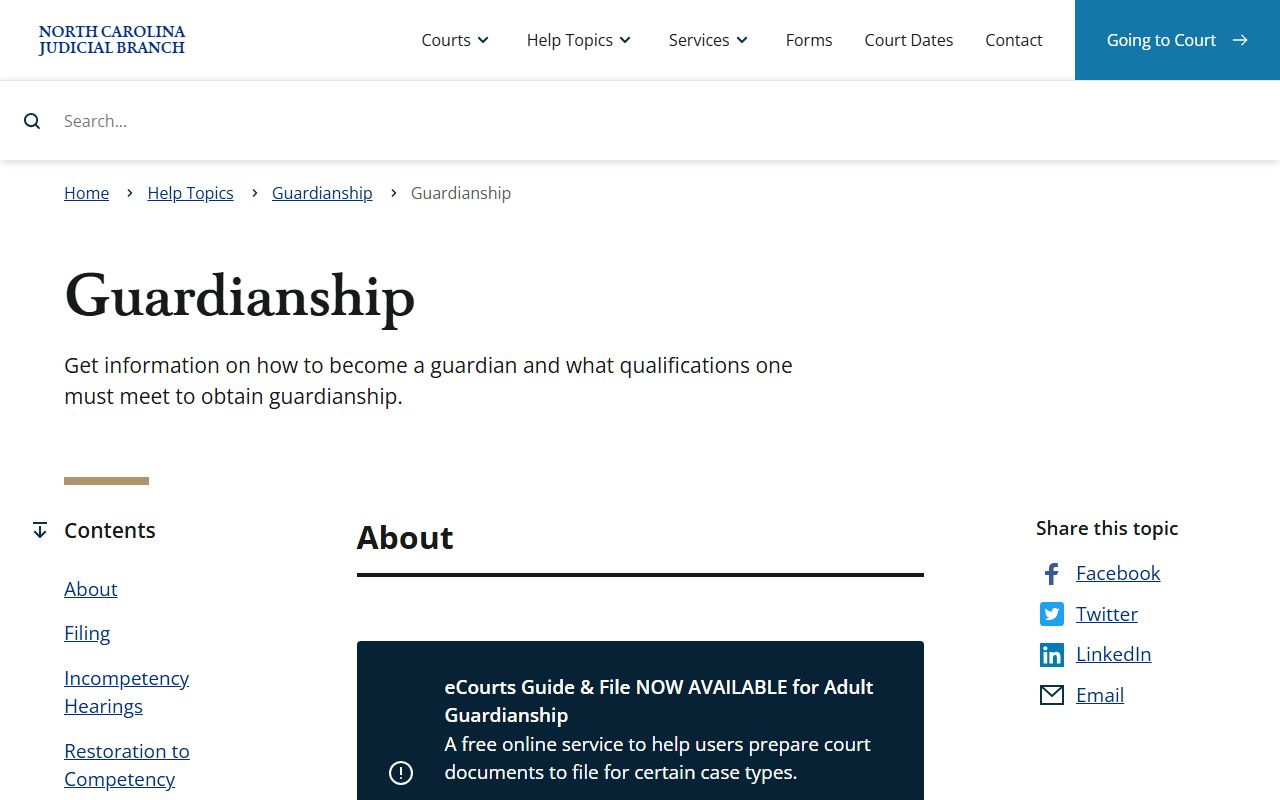
Guardianship is part of the clerk and court system, but public access may be narrower than ordinary estate administration because the file can contain medical and personal details.
Restricted Northampton Probate Records
Not every Northampton County probate or special proceeding record is open to public inspection. Mental health proceedings are generally restricted because they include medical and commitment information. Guardianship matters may contain sensitive competency, medical, family, and financial details. Juvenile-related records can be confidential under Chapter 7B. A public hearing search category may show "Probate or Mental Health," but that does not mean all documents behind that category are public.
N.C. G.S. 7B-3000 restricts juvenile court records, and N.C. G.S. 7B-2901 restricts abuse, neglect, and dependency records. Estate files that are ordinary public court records may still have protected identifiers redacted. Sealed records and expunged or confidential proceedings require statutory authority or a court order before access.
The juvenile-record confidentiality statute is one reason public probate-adjacent searches can return less information than a broad case search suggests.
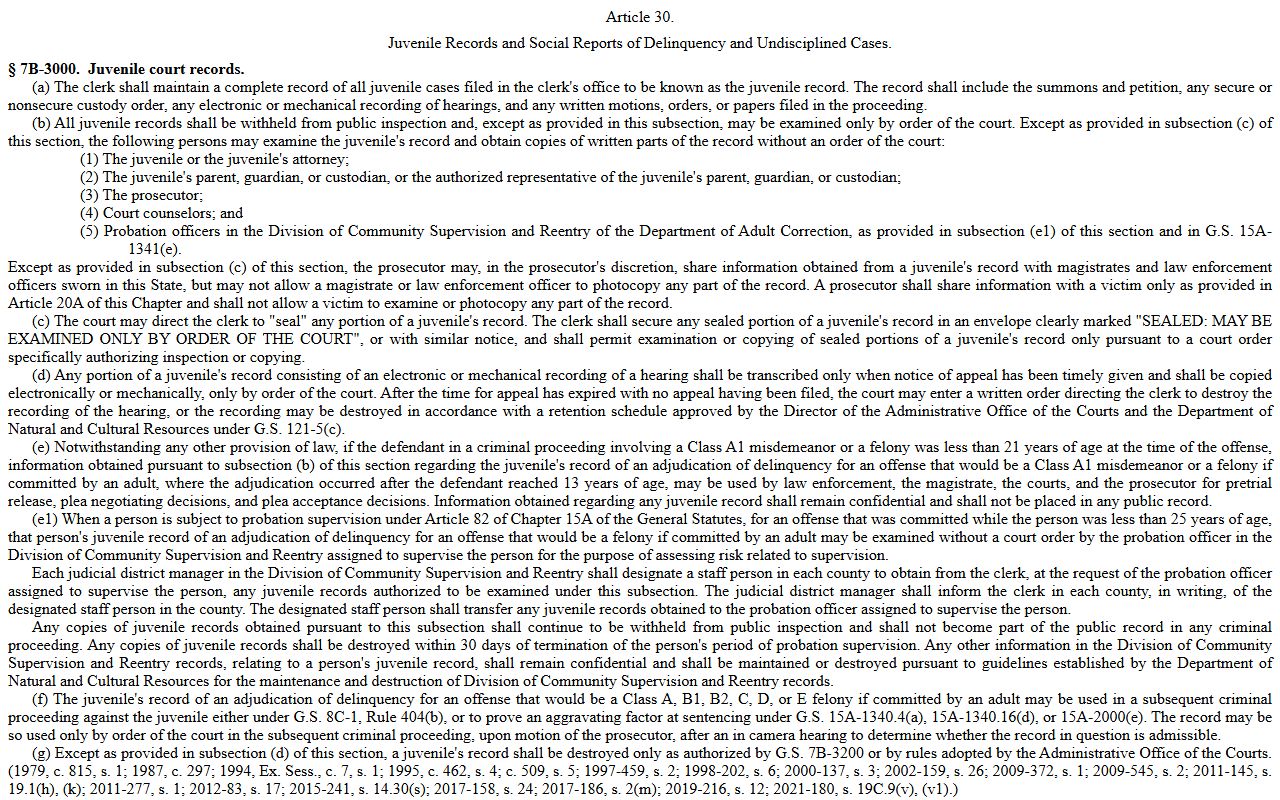
When a Northampton estate or guardianship matter intersects with juvenile confidentiality, the clerk may not release the same details available in ordinary estate files.
The abuse, neglect, and dependency confidentiality statute also affects access in sensitive family-related proceedings.
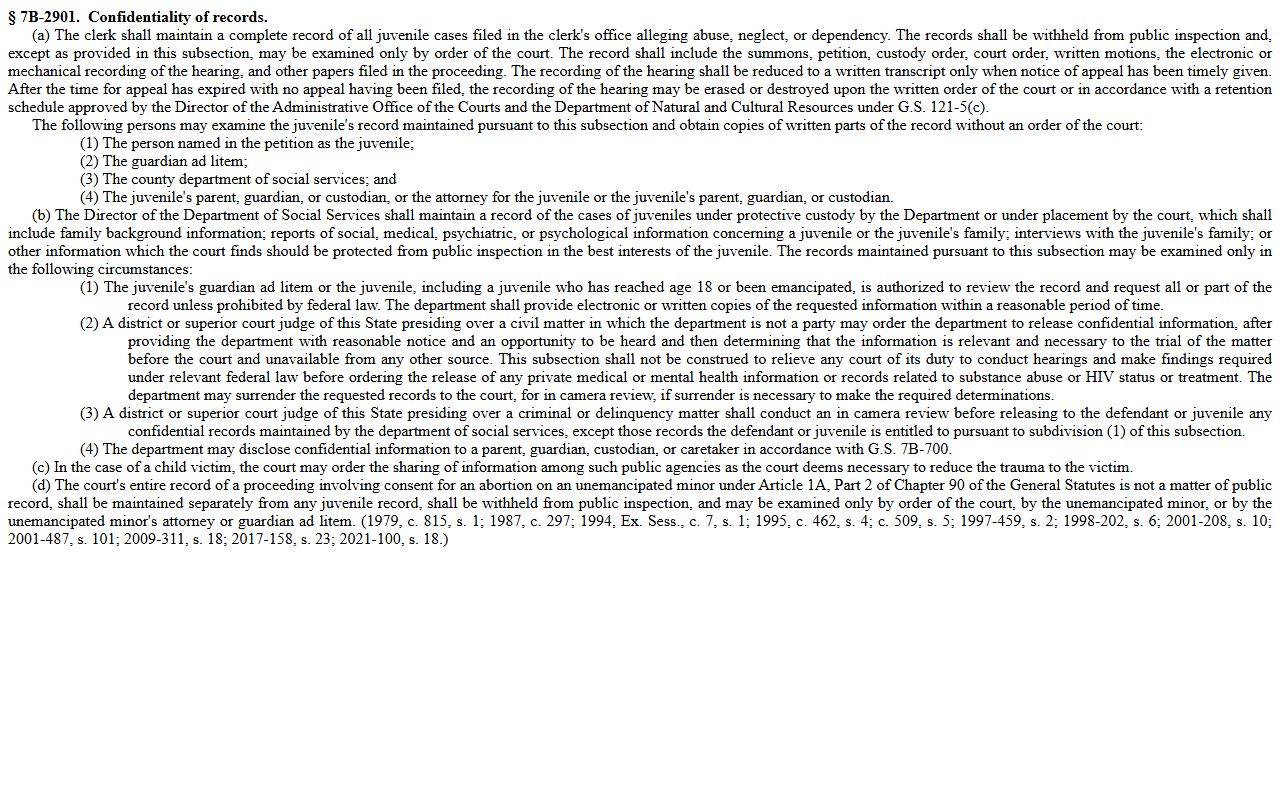
That limit is important for guardianship and special proceeding searches because a file may be partly public, partly redacted, or unavailable without court authority.