
Northampton County District Court Overview
North Carolina has one unified statewide court system rather than separate local county courts. Northampton County is listed in District Court District 7, Superior Court District 7B, and Prosecutorial District 7. District Court is the clean local trial-court focus for this page because it handles the lower-level criminal, civil, family, juvenile, traffic, and magistrate-connected matters that many residents search first. Superior Court remains important because felonies, higher-value civil cases, and appeals from District Court move there.
The District Court sits through the Northampton County courthouse in Jackson. The Clerk of Superior Court maintains the records and connects District Court records to public terminals, paper files, eCourts, copy requests, and court payments. That means a misdemeanor, traffic citation, small-claims eviction, custody matter, or juvenile case may be a District Court matter, but the record-copy counter is still the Clerk of Superior Court.
The North Carolina court structure page explains the statewide court hierarchy.
That statewide structure explains why Northampton County District Court and Superior Court are both part of the General Court of Justice rather than local municipal courts.
Northampton District Court Contacts
Northampton County does not have a set of separately numbered local district courts like some states. Instead, the relevant public contacts are the courthouse, clerk, District Court judges, magistrates, District Attorney, and related court offices. Use this table as the Northampton court contact map for District Court records and hearings.
| Court or Office | Role | Address | Phone |
|---|---|---|---|
| Northampton County Courthouse | Main courthouse for Superior and District Court services | 128 East Jefferson St, Jackson, NC 27845 | (252) 574-3100 |
| Clerk of Superior Court | Records, filings, estates, copies, terminals, and payments | Courthouse / PO Box 217, Jackson, NC 27845 | (252) 574-3100 |
| District Court Judges | Misdemeanors, infractions, family, juvenile, and lower civil matters | District Court District 7 | (252) 358-7080 |
| Superior Court Judges | Felonies, civil $25,000 or more, and appeals from District Court | Superior Court District 7B | (252) 358-7120 |
| Magistrates | Small claims, landlord-tenant, and preliminary criminal functions | Northampton County | (252) 534-7721 |
| District Attorney | State prosecutions in Prosecutorial District 7 | District 7 | (252) 358-7150 |
| Custody Mediation | Family and custody mediation | Northampton County | (252) 794-6814 |
The official courthouse page states that the new courthouse opened May 28, 2024. That matters because older office listings may still show 102 West Jefferson Street for some court-related functions.
District Court vs Superior Court
Northampton County has District Court, Superior Court, and magistrates within the North Carolina court system. It does not have a separate county court, JP court, or municipal court system for state cases. The distinction is based on the case type and legal threshold, not on a locally created county court.
| Topic | District Court | Superior Court | Magistrates |
|---|---|---|---|
| Civil threshold | Generally civil cases under $25,000 | Civil cases involving $25,000 or more | Small claims of $10,000 or less |
| Criminal matters | Misdemeanors and infractions | Felony criminal cases | Preliminary criminal functions |
| Family and juvenile | Domestic, custody, support, juvenile, and related matters | Appeals or transferred matters when allowed | Not the main family court forum |
| Traffic | Most traffic citations and infractions | Appeals or related serious criminal matters | Some waiver or preliminary processes may involve magistrates |
| Record custodian | Clerk of Superior Court | Clerk of Superior Court | Clerk of Superior Court for filed case records |
The Judicial Branch court types page explains Superior Court, District Court, and magistrate roles.
The court-type guidance supports the local table because Northampton's trial courts follow statewide jurisdiction rules.
Northampton Case Flow
Case movement depends on the type of filing. A traffic infraction may stay in District Court unless the person contests it, misses court, or appeals. A misdemeanor often begins in District Court and may end there by plea, dismissal, trial, or judgment. A felony may involve magistrate or District Court preliminary steps but is handled in Superior Court after indictment or transfer. Civil matters use the threshold rules, while small claims begin before magistrates.
Traffic and misdemeanor flow: Citation or charge › Magistrate or first setting › District Court hearing › Plea, trial, dismissal, or disposition › Payment, compliance, or appeal
Felony flow: Arrest or charge › Magistrate or first appearance › Probable cause or indictment process › Superior Court proceedings › Plea or trial › Sentence › Appeal
Civil and small-claims flow: Complaint or claim › Service › Answer or hearing › Judgment or order › Collection, compliance, or appeal
Use Northampton County court dockets for hearing-date lookup, and use the clerk for paper-file review when the online result is incomplete.
Northampton District Court Case Types
District Court records in Northampton County may include misdemeanors, infractions, traffic citations, lower-value civil disputes, domestic cases, child support, custody, juvenile matters, and magistrate-related small claims. The District Court official page describes its statewide civil, criminal, juvenile, and magistrate coverage. In practical records terms, the case category affects which search fields help most, which hearings appear, and whether a record is public, restricted, or available only through the clerk.
Traffic cases are especially common District Court records. Waivable offenses may be handled online, by mail, or in person when eligible. If a person pays or waives the offense, North Carolina treats that as being found guilty or responsible as charged, with possible license and insurance effects. More serious traffic offenses, DWI-related matters, and cases requiring appearance should be treated as court matters rather than simple payment tasks.
The official District Court page describes statewide District Court jurisdiction.
That overview matches Northampton's local District Court role for misdemeanors, infractions, family, juvenile, and civil matters under the state threshold.
Northampton District 7 Context
Northampton belongs to Prosecutorial District 7, Superior Court District 7B, and District Court District 7. Prosecutorial District 7 includes Northampton, Bertie, Halifax, and Hertford Counties. The District Attorney page names Kim Scott and explains that the office represents the State. The public defender system also matters for District Court records because appointed counsel may appear in misdemeanor, felony-preliminary, juvenile, and other qualifying cases.
Superior Court District 7B provides the higher trial-court context. Superior Court handles felony crimes, civil cases of $25,000 or more, and appeals from District Court. District Court handles the lower trial division. Magistrates are officers of District Court and handle small claims of $10,000 or less, landlord-tenant cases, recovery of personal property, motor vehicle mechanic's liens, and some preliminary criminal functions.
The Superior Court overview explains the higher trial division that receives felonies and District Court appeals.
That Superior Court context helps explain why a Northampton case may begin in District Court but later appear in the higher trial division.
The District Attorney District 7 page identifies the prosecutorial district serving Northampton County.
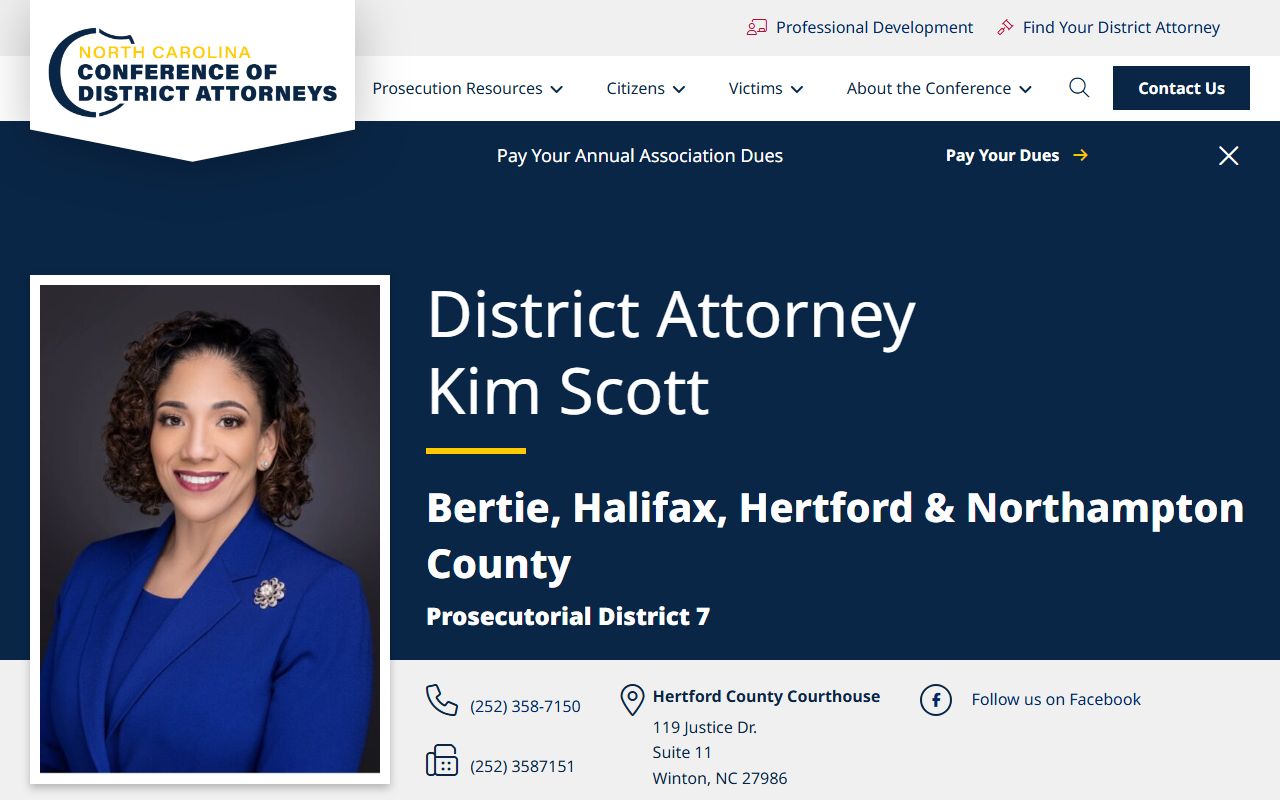
The District Attorney connection is most relevant for criminal District Court records, charging decisions, hearings, and dispositions.
Northampton Magistrates and Hearings
Northampton magistrates are part of the District Court structure, not a separate justice court. They handle small claims, landlord-tenant matters, recovery of personal property, mechanic's liens, and preliminary criminal functions. For warrant-related or preliminary criminal process questions, the contact directory lists magistrates at (252) 534-7721. Filed case records still route through the Clerk of Superior Court and the eCourts tools when public.
To search hearings, use the eCourts Search Hearings channel and select Northampton County. Search types can include case number, party name, business name, attorney name, attorney bar number, judicial officer, and courtroom. Hearing categories include civil, criminal, family, and probate or mental health. Public access can be limited when juvenile, mental health, sealed, or other confidential records are involved.
North Carolina Recovery Courts provide a statewide specialty-court context for some criminal and juvenile matters, although Northampton-specific recovery court detail was limited in the research. People with a pending case should ask the clerk, District Attorney District 7, Public Defender District 7, probation, or their attorney whether a referral or diversion option exists for that specific case.
The North Carolina Recovery Courts page explains specialty court programs for high-risk and high-need participants.
Recovery court availability and eligibility are case-specific, so Northampton users should confirm any local option through court participants rather than assuming a public docket label means admission.
Note: Juvenile, mental health, sealed, and expunged District Court records may not appear in public searches even when a hearing or file exists.